Diamonds 💎 are a Girls Best Friend : Inspiring… Living Before the End : On a quiet morning in an Airbnb in Lancaster, Pennsylvania, I sat on the deck with a cup of coffee, scrolling through Facebook. That’s when I came across a piece by Kelsey Abernathy McLean, a Pennsylvania writer who explores transformation, survival, and the extraordinary moments hidden inside ordinary life.Something about her words stayed with me. As I looked out over the stillness of that morning, I thought: Maybe I should tell my story too.I had never thought much about life after death. I had heard the ideas—through religion, through stories, through near-death experiences—but they always felt distant. Abstract.That changed in the summer of 2006.It began as an ordinary day. We were a week into summer break, and like every year since 1992, I was helping run a boys’ basketball camp. That day, the scheduled speaker didn’t show, and I was asked to step in.I told the story of Gene Banks—a freshman at Duke who had been threatened before a big game. Despite the fear, he chose to play anyway and went on to have one of the best games of his career.Afterward, he said, “If it was going to be my last one, it was going to be great.”I left the group with a simple message: Live each day like it’s the last one you get.I had no idea how literal that message was about to become.Later that afternoon, I was home alone, vacuuming the pool in the heat. A bee struggled in the water near the edge. I reached down, lifted it out, and set it on the concrete.It stung my pinky.I barely reacted; I just kept working. But a few minutes later, I felt a tingling in my lips, then numbness. My face began to swell. Inside the pool house, I looked in the mirror. My eyes drooped, my lips and tongue were swelling, and my face looked distorted—unfamiliar.Something is very wrong.I called my wife and told her I would drive myself to the hospital. She told me not to move and called an ambulance. By the time she and the kids pulled into the driveway, it had gotten worse. I tried to act calm, but the moment they saw my face, their expressions shifted to terror.That’s when it hit me: This might be serious.My breathing tightened. Each inhale was shorter than the last. My throat was thick, closing. And then—unexpectedly—the fear eased.Nothing had improved physically. My body was still reacting, but internally, something shifted. The urgency softened. The panic loosened its grip, and in its place came a stillness I hadn’t chosen. Time felt different.I lowered myself to the ground, staring up at the sky, fighting for air—but no longer fighting the moment. I was still aware of everything around me, but I no longer felt fully inside it.And then I knew: I was dying.I asked to speak to my kids, just long enough to tell them I loved them, that I would always love them and be proud of them. I told them to take care of their mom and each other. Then I asked for them to be taken away. I couldn’t let them watch.My body continued to struggle, but I wasn’t afraid the way I had been. The fear didn’t disappear entirely, but it no longer controlled me. In its place was something steady—a calm that felt given.There was no voice. No figure. And yet, I knew I wasn’t alone.The world began to narrow. Darkness closed in from the edges, like an old television signing off. Everything went black, and then—light.It started faint, then expanded—like clouds parting to reveal the sun. But this light was different: brilliant, yet soft; impossible to look away from. It didn’t blind me; it held me and drew me in. As it did, every trace of fear disappeared.Then came a sound, faint and distant, pulling me back. The light remained, but something else pressed in—a steady pull in the opposite direction.Then came weight. My chest tightened, my throat burned, and the stillness gave way to something dense and physical: air—hard, uneven, insufficient. Voices broke through.“Stay with us.”“Breathe.”“You’re okay.”I tried to inhale. It caught halfway, then another—shallow, but real. I was back, not all at once, but in fragments of pressure, hands, heat, and noise. Beneath it all was a single realization: I’m still here.Then, the moment fractured again.The paramedics didn’t just work; they fought.The ambulance was a blur of harsh fluorescent light, cold steel, and loud, rhythmic panic. The siren wailed above us—a piercing, mechanical scream cutting through the streets, reflecting off the metal walls in disorienting echoes. Inside, everything moved in hyper-drive.The sharp smell of rubbing alcohol and sterile plastic hit first. Radio chatter crackled violently over the speakers—rapid-fire jargon, heart rates, blood pressure numbers, dispatch yelling instructions back and forth. Equipment beeped incessantly, a frantic, high-pitched telemetry track measuring a body that was shutting down.”Breathe!””We’re losing his pressure! Push another round!”Faces hovered over me—eyes wide above blue masks, slick with sweat. They were shouting over the engine roar and the siren, their hands moving with terrifying, practiced speed. Syringes torn from plastic wrappers. Tubes snapped into place. Hands slammed onto my chest in hard, rhythmic compressions, trying to force life back into a heart that was letting go.And yet, suddenly, I was sitting on a bench inside the ambulance, watching.Below me, my body lay on the stretcher. Looking down from that bench, none of the hysteria reached me.I saw the bright red and blue lights flashing against the side windows, painting the paramedics’ faces in alternating shades of alarm. I heard the tires squealing as the rig whipped around corners, throwing equipment against the cabinet doors. I felt the violence of the moment. But I didn’t feel the fear.To them, it was a battle against time—a chaotic, desperate attempt to pull a man back from the edge. But from where I sat, watching the blue lights strobe across the ceiling, the noise faded into a quiet background hum. The frantic hands, the shouting, the piercing sirens—it all belonged to a world I was gently slipping out of. I watched them push my body into the hospital, watched the controlled chaos, and watched them fight for me.And I felt peace. Not because I believed I would return, but because I believed I wouldn’t. There was no resistance, no struggle—only acceptance.And then, like a dream ending, it was gone.I woke up in the hospital. Alive. Breathing. Still here.People ask what I think it was. A physical response? A neurological event? Something spiritual?The truth is, I don’t know. But I know this: I felt myself let go of life, and I was at peace. I felt something meet me there, and I was not alone. Somehow, I came back carrying that with me.I used to believe life was something you hold onto, something you fight to keep. Now I see it differently. Because in the moment I thought I lost it, I didn’t feel fear. I felt at peace. And whatever was waiting for me in that light didn’t feel like the end.It felt like home.And maybe that’s what I was meant to understand all along: not just how to face the end, but how to live before it.Like Gene Banks said: If this one were your last—make it a great one.

  Why do you write ✍️ a story or a book ? It’s a great question, and my answer will differ from most because I have never attempted to sell any of my books along the way.

I see my role in life for the remainder of the time here as being a distributor of Hope ! I am not nor ever have been trying to sell someone, but trying hard to work off a debt to God. For reasons beyond my own understanding, I have found myself repeatedly in the right place at the right time and combined with my willingness to accept help, I type out the words to what I like to call book 6 of 7.

The people involved with these stories are all about doing for others, the Greater Good if you will. As Chris Dodson states very elegantly in his take, the folks we are highlighting are not seekers of glory, but people are just doing things that are in their wheelhouse.

Not everyone has the same comfort zone, not by a long shot. But one doesn’t need thousands of people who want to chase the same dream because you can move mountains with a select few.

Lawrence ” Big Picture ” Nesselrodt likes to live live by the thought of ” Leave it Better than you found it “. For me, it’s always been Duke, UVA, and wherever I stay, meaning that you should look for every way possible to give back to your community !

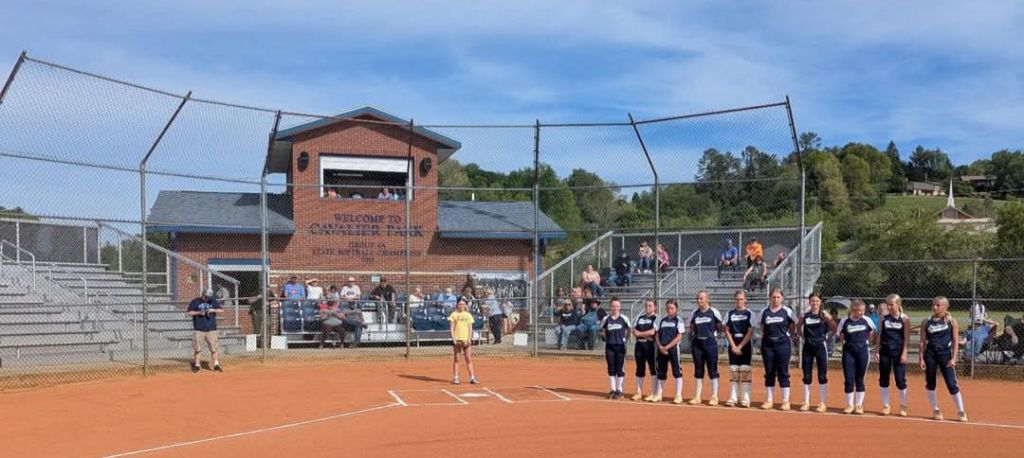
At this point, I turn my efforts over to three very trusted individuals who will proceed to create Book Six – Diamonds 💎 are a Girls Best Friend !

John, Nancy, and Emma – you are now on the clock ⏰️
Thank you to everyone who helped me get as many of the facts straight as possible because it needed to be told. People need to believe that they can make a difference in the Big Picture !

Leave a Reply